

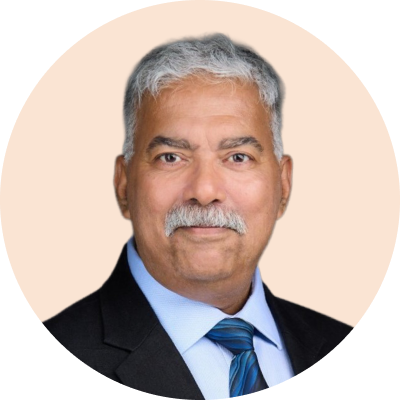

Dr Bhaskar Dasgupta on regulation and digital assets in 2026
As digital asset services become embedded in robust regulatory frameworks, especially in the UAE, Bahrain, and potentially Saudi Arabia, new opportunities are opening in tokenised funds and real asset products. Meanwhile, the expansion of family offices in the Gulf Cooperation Council (“GCC”) and structured wealth platforms in India is driving demand for advanced administration and governance.
Big shifts transforming the landscape
Digital assets are no longer a side show. The UAE and Bahrain have moved from experimentation to proper institutional infrastructure, with clear rules and licensed players. Saudi Arabia is proceeding carefully but with serious work under way on tokenisation and market structure.
Meanwhile, regional capital is being recycled within the region and toward Asia. GCC sovereign investors are still global, but there has been a visible tilt toward India and Israeli technology, and a quieter trimming of exposures to some Western markets.
India has become the core node for payments and transaction pipes between the Middle East and Asia. The global transformation of India’s United Payments Interface and renewed focus on rupee settlement mechanisms are steadily turning into real trade and investment flows, not just policy speeches. The economy is also growing very fast and remains promising, despite tariff and trade headwinds.
The rise of the single-source provider
A common theme is that clients want integrated solutions rather than a patchwork of providers.
In the UAE and Bahrain, managers expect one administrator who can look after traditional private equity and funds, as well as tokenised assets, with consolidated reporting and proper controls.
In Saudi Arabia, the growth of private markets under Vision 2030 is translating into rising demand for alternatives administration, but with a premium placed on governance, risk and regulatory comfort. There is huge demand for fund platforms and also capital raising.
In India, managers are pushing hard on operational efficiency and cost, while needing help to stay compliant across multiple regulatory regimes as they raise and deploy capital internationally. GIFT City is growing rapidly, with outbound flows now increasing substantially, which is driving demand for family office, capital raising, international feeders, corporate services, and all other integrated corridor services.
In Israel, technology and venture clients are most focused on speed, responsiveness, and real-time transparency in reporting. They expect the service layer to move at the same pace as their portfolio companies. There is now a drive to explore Apex Digital 3.0 services including tokenisation and stablecoin support. Capital raising has renewed energy after the successful New York Apex Invest event followed by Israeli managers visiting Apex Invest Lausanne and Abu Dhabi.
Positive drivers in 2026
The most positive driver is the ratification of payment and settlement corridors between the GCC and India. Greater UPI acceptance, experiments with bilateral digital currency arrangements, and central bank digital currency pilots will all reduce friction, cut costs, and shorten settlement times. This naturally increases demand for sophisticated treasury, administration, and reporting services.
As digital asset custody and administration become standard under maturing frameworks in the UAE, Bahrain and, potentially, Saudi Arabia, we see entirely new lines of business opening up around tokenised funds, real assets, and capital markets products.
At the same time, the ongoing build out of family offices across the GCC, combined with more structured family wealth platforms in India, is expanding the universe of clients who need institutional grade administration, governance, and reporting.
Expect acceleration of AI in 2026
AI is already moving from pilot projects to the production floor in fund servicing, and this will accelerate through 2026.
On the efficiency side, advances in natural language tools will allow a large part of regulatory reporting, reconciliations, and client correspondence to be automated, bringing turnaround times down sharply. Predictive tools will improve cash flow forecasting and liquidity management, particularly for complex, multi-jurisdiction structures.
On the risk side, AI-based surveillance and monitoring will become central. Real-time pattern recognition across transactions, positions, valuations, and compliance metrics will help firms catch issues much earlier. The competitive advantage will sit with administrators who can deploy these tools while still offering human judgement, relationship management, and escalation that clients trust.
Data sovereignty rules in markets such as Saudi Arabia and India will shape what kind of cloud-based AI deployments are possible, so architectural choices will matter.